
Screen printing
Screen-printed trims and panels for garment and packaging work.
Details
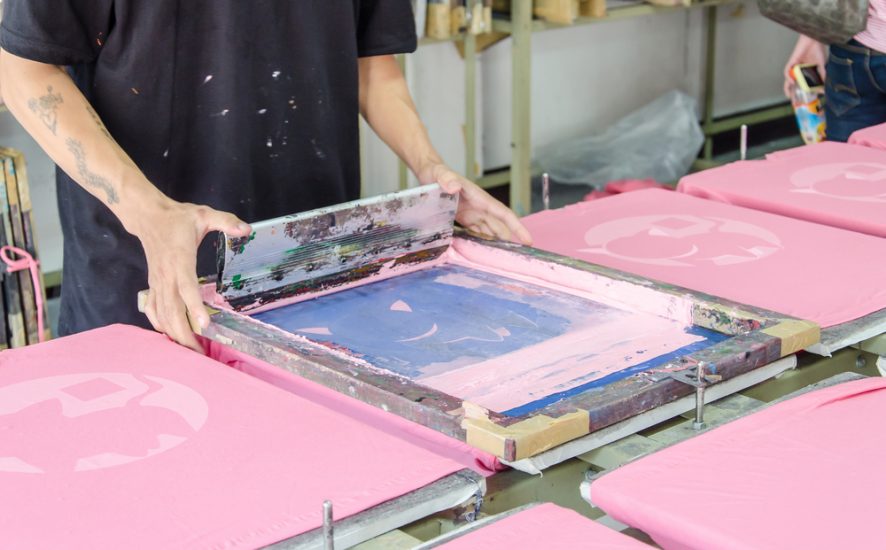
The core equipment runs from screen to curing unit. Mesh count and ink type are the two variables that most directly affect the result. Mesh screen: polyester stretched over an aluminium frame. Low mesh count allows heavy ink flow for bold graphic prints; high count suits fine-line detail. Light-sensitive emulsion: coats the screen before exposure and hardens under UV light to form the stencil. Unexposed emulsion washes away during screen preparation. UV light source: exposes the coated screen through the film positive, hardening emulsion in the open design areas. Squeegee: draws ink across the screen with even pressure. Blade hardness affects ink deposit weight, which affects colour opacity and fabric hand. Ink: the most consequential specification. Plastisol inks contain PVC and phthalates, failing OEKO-TEX Standard 100. Water-based and discharge inks bond chemically with the fibre and are the correct specification for certified sustainable textile production.